Queensland deepfake underscores need for truth in political advertising laws
— Organisation: The Australia Institute —The deepfake, which is marked as “AI-generated content”, depicts Premier Miles dancing, to make fun of Miles for posting a video of himself making a sandwich.
Effective truth in political advertising laws already exist; they have operated in South Australia since the 1980s, were legislated in the ACT in 2020, and been proposed in other jurisdictions – including by Queensland Labor rank-and-file.
“Even when political ads are marked as AI-generated, political parties and candidates should be wary about running them. No one benefits from a race to the bottom where fake content is used to ridicule political rivals,” said Bill Browne, Director of the Australia Institute’s Democracy & Accountability Program.
“Queensland saw the use of one of the first political deepfakes in Australia, at the 2020 state election. It looks like the trend is continuing.
“While this deepfake was marked as AI-generated, it shows how easy it has become to create fake content – and there is no guarantee that other fake content in the Queensland election will be clearly identified. In Queensland, it is perfectly legal to lie in a political ad, and it shouldn’t be.
“Elections elsewhere around the world have seen deepfake images and videos used with the deliberate intent to deceive.
“Truth in political advertising laws in Queensland, along the lines of those already in place in South Australia and the ACT, would help ensure that voters are not misled.”
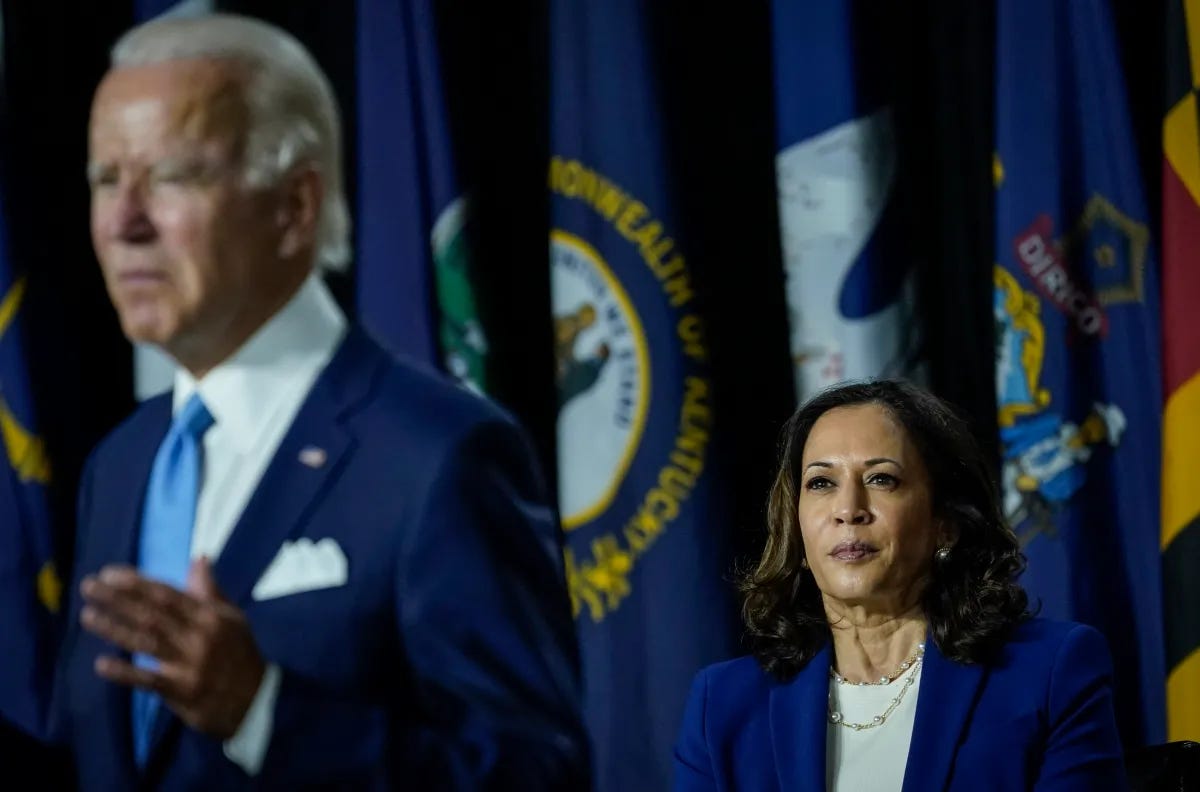
Biden is out, Harris is in – what happens now?
— Organisation: The Australia Institute —Dr Emma Shortis and Ebony Bennett, host of the Australia Institute’s Follow the Money podcast, reflect on Joe Biden’s legacy, his endorsement of Kamala Harris and what it could mean for the election campaign.
This discussion was recorded on Monday 22 July 2024 and things may have changed since recording.
Host: Emma Shortis, Senior Research for International & Security Affairs, the Australia Institute // @EmmaShortis
Host: Ebony Bennett, Deputy Director, the Australia Institute // @ebony_bennett
Theme music: Blue Dot Sessions
You can see Professor Joseph E Stiglitz speak live in several cities across Australia as part of the Australia Institute’s 30th anniversary celebrations. Tickets are available online.
Government’s New Gas Exploration Permits Put Climate at Risk
— Organisation: The Australia Institute —The United Nations and the IEA have been clear that there can be no new coal, oil or gas projects if we are to avoid dangerous climate change. There is no ‘clean energy transition’ while governments keep approving highly polluting new fossil fuel projects
Key Points:
- A series of new offshore gas and sea dumping exploration permits have been granted by the Federal Minister for Resources, The Hon Madeleine King, today.
- The projects are off the coast of Western Australia and Victoria.
- Sea dumping (described by the gas industry as CCS) increases emission by enabling new fossil fuel projects. Just three Australian coal fired power stations emit more carbon pollution than the entire world’s current CCS capacity.
“This government was elected to take action on climate change and reduce emissions, but they are opening new fossil fuel projects instead,” said Mark Ogge, Principal Advisor at The Australia Institute.
“Expanding Australia’s gas production in the middle of a climate emergency is not just short-sighted: it treats our Pacific Island neighbours and future generations with contempt.
Biden’s Withdrawal Highlights a System in Turmoil, Australia Must Step Up Independence
— Organisation: The Australia Institute —To do so, Australia will need to abandon its conciliatory deference to the U.S.A and instead begin advocating strongly in our own national interest.
Australia has power and agency in the US-Australia relationship. With a second Trump Presidency remaining a real possibility, Australia also has a significant stake in the survival of US democracy and global leadership.
“Biden had nowhere to go, and that’s where he went,” said Dr Emma Shortis, Senior Researcher for the Australia Institute’s International & Security Affairs Program.
“Biden has endorsed Vice President Kamala Harris, which was the only logical choice. Harris is now an experienced Vice President, accustomed to the national stage and particularly strong on the issue of reproductive rights.
“While American politics has been preoccupied with recent events, this issue is one that motivates voters to turn out. It did in the 2022 mid-terms, and it likely will do again.
“There is a long way to go until November, but Trump currently remains ahead in the polls.
“What Australia does matters on the world stage, and we can no longer blindly rely on the United States to defend us.
“Instead of considering how Australia can accommodate America under Trump, we can instead focus on standing up for what matters to us and push hard for our interests and values. It’s time that we learned to work with America, not just for it.”
Luxury Car Tax and the Ute Loophole
— Organisation: The Australia Institute —Even though the transport sector is the third largest source of Australian emissions and accounted for 21% of national emissions in 2023, the Australian Government continues to incentivise the sale of big utility vehicles (utes) relative to other car options. Over the last twenty years, the number of utes on our roads has grown much faster than the number of passenger vehicles.
While utes are necessary to a range of occupations, their proliferation, particularly of larger heavier models, damages the environment, damages roads, and incurs a range of other costs on society. A key example of this incentivisation is an exemption from Luxury Car Tax (LCT), which applies to essentially all utes.
Large vehicles impose considerable costs on society, from their higher carbon emissions and rates of road damage to serious safety concerns. The Australian Government should ensure that these costs are accounted for by properly taxing and regulating these vehicles, starting with removing the LCT exemption for utes. These policies would curb the growth in expensive and damaging vehicles in Australia and limit the use of utes to legitimate commercial purposes rather than personal luxuries.
The post Luxury Car Tax and the Ute Loophole appeared first on The Australia Institute.
Big ute loophole cost taxpayers over $250 million in 2023
— Organisation: The Australia Institute —A loophole in Australia’s tax law effectively subsidises large utes such as Ram and Chevrolet pick-up trucks by avoiding the Luxury Car Tax (LCT) that other imported vehicles pay, regardless of if the vehicles are used for work, recreation or just commuting.
The $250 million cost of this subsidy is more than ten times the Federal Government’s Active Transport Fund for the construction and upgrade of cycle paths every year.
Key Findings:
- Luxury car tax is paid on the sale or importation of most cars valued above $81,000.
- However, any vehicle that can carry twice the weight in payload that it can carry in people, is exempt regardless of what it is used for.
- Non-luxury utes, used by most tradies, sit below this threshold and would be unaffected by the removal of the luxury ute loophole.
“The Australian public is subsidising big, dumb utes by hundreds of millions of dollars each year,” said Rod Campbell, Research Director at the Australia Institute.
“These vehicles are damaging roads, reducing safety and increasing emissions, yet they are given a massive tax break.
“Removing the luxury car tax exemption will not affect most ute drivers, particularly tradies.
“Instead it targets those buying large luxury vehicles, worth sometimes hundreds of thousands of dollars, for personal use.
Submission to the Inquiry into Local Government funding and services (Victoria)
— Organisation: Prosper Australia —Budget ’24: Australia Needs a Tax Shift
— Organisation: Prosper Australia —Helping families an empty promise for Victorians on public housing waiting lists – and Victorian businesses are paying the price.
— Organisation: Prosper Australia —Supply targets alone won’t solve the problem
— Organisation: Prosper Australia —Buying better income taxes with better land taxes
— Organisation: Prosper Australia —The Great Housing Hijack – a new book by Dr Cam Murray
— Organisation: Prosper Australia —Changes to Stage 3 Not Enough: We Need a Tax Shift
— Organisation: Prosper Australia —Why housing supply starts when speculation ends
— Organisation: Prosper Australia —How I learned to stop worrying and love land value uplift
— Organisation: Prosper Australia —Landowners need to step up to the housing emergency – or get out of the way
— Organisation: Prosper Australia —Victoria’s Housing Statement – A promising start, the details will determine success
— Organisation: Prosper Australia —Australia: Made for Free Trade and a Tax on Rent
— Organisation: Prosper Australia —Waleed Aly wins 2023 E.J. Craigie Writing Award
— Organisation: Prosper Australia —In Australia, why do people who produce nothing get rewarded the most? – Waleed Aly
— Organisation: Prosper Australia —Prosper Australia welcomes Inquiry attention to Stamp Duty to Land Tax transition
— Organisation: Prosper Australia —Submission to the Inquiry into the Rental and Housing Affordability Crisis in Victoria
— Organisation: Prosper Australia —In brief: Planning deregulation, Housing Supply and Affordability
— Organisation: Prosper Australia —Land Ownership Makes No Sense
— Organisation: Prosper Australia —Community Land Trusts can progress Georgist theory
— Organisation: Prosper Australia —An American bin fire | Between the Lines
— Organisation: The Australia Institute —The Wrap with Ebony Bennett
Watching the bin fire that is the American presidential race, Australian democracy is looking pretty good.
There are without doubt some key things to be grateful for.
Our system of compulsory preferential voting, for example, which ensures no vote is wasted – unlike in the United States and the United Kingdom.
The Australia Electoral Commission, which ensures our elections are transparent and fair; free of the blatant gerrymandering we see in the States.
Even the secret ballot, an essential component of democracy worldwide, is an Australian invention.
But we cannot take our democracy for granted.
We need truth in political advertising laws that make it illegal to lie in political ads so public trust in our system doesn’t erode irreparably.
We need political finance reform exposes the undue influence of fossil fuel companies and others – and that doesn’t rig the system against independents and minor parties.
We also need to have a serious conversation about inequality, which undermines faith in democracy.
New Afterword for The Divide
— —The Divide was first published in 2017. In the years since, many people have written to me, or approached me during public events, to share the impact it had on them. I am always grateful for this. And yet as a researcher, I look back on the text now and wish that it could include all that I have learned over the past seven years. Knowledge moves quickly, and I want to make it available to readers. My goal with The Divide was to serve as an accessible introduction. I hope it continues to do that for readers. But - until Penguin is ready to produce a new edition - here are some resources that I encourage people to explore for more information and new knowledge.
1. On the rise of capitalism in Europe
The Divide briefly describes the violent processes of enclosure and dispossession that accompanied the rise of capitalism in Europe during the long 16th century. This description is improved with new information and references in the opening chapters of Less is More. It describes how worker revolutions brought down feudalism and improved human welfare, before elites responded with enclosure and other interventions to push wages back down and restore working-class subordination.
2. On the human toll of colonialism and capitalist integration
Superannuation tax concessions are making inequality worse
— Organisation: The Australia Institute —The government is currently legislating to reduce the tax concessions available on superannuation balances of more than $3m. While this measure would affect only around 80,000 people out of the 17m holders of superannuation conservatives and lobbyists of the wealthiest are arguing this will hurt those who have saved for their own retirement.
In reality, the use of superannuation tax concessions has been completely abused. The purpose of superannuation is to reduce the burden on the pension system, but now we see in articles such as in the Financial Review today, people arguing that they are using superannuation to build up their inheritance for their children and grandchildren and that these measures to reduce tax concessions on super balances of over $3m are “stealing my children’s inheritance”.
Superannuation tax concessions for the wealthiest only serve to entrench inequality in our society, but worse, because the concessions allow the wealthy to reduce the tax they pay on their income before retirement, it means Australian taxpayers are in effect funding the retirement of the very wealthiest in the country.
The cost of these taxation concessions puts lie to the line that they are “self-funded” retirees.
New Preface to The Divide
— —Look around and it is impossible to ignore the fact that our world is torn apart by brutal inequality. Some countries enjoy unimaginable material affluence while others suffer mass deprivation, with billions lacking basic necessities like nutritious food and clean water. The injustice stares every sane observer in the face. But where does it come from? This book shows that global inequality is not a natural phenomenon. It is not the inevitable feature of a normal economy. It is the result of the particular kind of economy that dominates our world. Capitalism.
The word capitalism tends to cause immediate confusion. For most people it calls to mind things like businesses, markets and trade: the ability of people to produce and sell things to one another. Who could possibly be against this? But in fact businesses, markets and trade existed for thousands of years before capitalism. Capitalism is a relatively recent system, having emerged in Western Europe only about 500 years ago. If one was to point to the single most important defining feature of this particular economic system, it would be that it is fundamentally anti-democratic.
What would Trump 2.0 mean for the global economy?
— Organisation: The Australia Institute —On this episode of Dollars & Sense, Greg Jericho discusses the latest International Monetary Fund Update on the global economy, the possible impact of American tariff hikes on global efforts to tackle inflation, and the real story behind Australia’s seemingly rosy unemployment data.
Greg Jericho is Chief Economist at the Australia Institute and the Centre for Future Work and popular columnist of Grogonomics with Guardian Australia. Each week on Dollars & Sense, Greg dives into the latest economic figures to explain what they can tell us about what’s happening in the economy, how it will impact you and where things are headed.
Host: Greg Jericho, Chief Economist, the Australia Institute // @GrogsGamut
Host: Elinor Johnston-Leek, Senior Content Producer, the Australia Institute // @ElinorJ_L
Theme music: Blue Dot Sessions
Wage Insurance: A Potential Policy for Displaced Workers
— Organisation: Federal Reserve Bank of New York — Publication: Liberty Street Economics —Why no seat is ‘safe’ anymore
— Organisation: The Australia Institute —It’s said that ‘disunity is death’ in Australian politics, but – as several major party politicians found out in the 2022 election – falling in behind an unpopular policy agenda can be pretty dangerous for your career as well. On this episode of Follow the Money, Australia Institute Executive Director Richard Denniss joins Ebony Bennett to discuss the big changes taking place in Australian politics and how they might influence the next election.
This discussion was recorded on Tuesday 16 July 2024 and things may have changed since recording.
Guest: Richard Denniss, Executive Director, the Australia Institute // @RDNS_TAI
Host: Ebony Bennett, Deputy Director, the Australia Institute // @ebony_bennett
Show notes:
Power sharing in Australian parliament by Bill Browne and Richard Denniss (July 2024)
Theme music: Pulse and Thrum; additional music by Blue Dot Sessions
You can see Professor Joseph E Stiglitz speak live in several cities across Australia as part of the Australia Institute’s 30th anniversary celebrations. Tickets are available via our website.
Trump defiant after assassination attempt
— Organisation: The Australia Institute —On this episode of After America, Dr Emma Shortis speaks to Professor the Hon Bob Carr about the attempted assassination of former President Donald Trump and what it could mean for the campaign, the emergence of JD Vance as Trump’s running mate, and the trajectory of American foreign policy.
This discussion was recorded on Tuesday 16 July 2024 and things may have changed since recording.
Guest: Professor the Hon Bob Carr, former Australian Foreign Minister and former Premier of New South Wales // @bobjcarr
Host: Dr Emma Shortis, Senior Research for International & Security Affairs, the Australia Institute // @EmmaShortis
Theme music: Blue Dot Sessions
You can see Professor Joseph E Stiglitz speak live in several cities across Australia as part of the Australia Institute’s 30th anniversary celebrations. Tickets are available via our website.
Should Australia ban fossil fuel advertising?
— Organisation: The Australia Institute —The United Nations Secretary-General, António Guterres, has called for a global fossil fuel advertising ban. This is a policy idea that has been previously proposed by advocates in Australia, and that was quickly backed by the Greens and nine Independent MPs after the UNSG’s endorsement.
Fossil Ad Ban has been leading the charge in Australia to “stop fossil fuel companies and high greenhouse gas polluters using marketing and sponsorships to delay the inevitable and urgently required social transition to clean energy.”
What Was Up with Grocery Prices?
— Organisation: Federal Reserve Bank of New York — Publication: Liberty Street Economics —Hope and hydrogen – Australia’s hydrogen export charade
— Organisation: The Australia Institute —The Australian Government claims that green hydrogen is part of its vision for becoming a renewable energy ‘superpower’, but budget documents show this is not the case. Current industrial hydrogen use in Australia is 500,000 tonnes per year. The Commonwealth Government is budgeting for green hydrogen production of around 500,000 tonnes per year into the 2040s. Given the first users of green hydrogen will be existing industrial users of fossil hydrogen, this leaves no hydrogen for export from Australia.
This briefing note formed part of The Australia Institute’s submission to consultation on the Commonwealth Government’s Hydrogen Production Tax Incentive.
The post Hope and hydrogen – Australia’s hydrogen export charade appeared first on The Australia Institute.
Australia wastes billions making housing more expensive
— Organisation: The Australia Institute —How did Australia get itself into such a mess with housing? What impact is the crisis having on renters? And why does everyone seem to think investing in the property market is a good idea except the government? On this episode of Dollars & Sense, Australia Institute Senior Economist Matt Grudnoff talks about what caused Australia’s housing crisis and what government can do to fix it.
Host: Matt Grudnoff, Senior Economist, the Australia Institute // @MattGrudnoff
Host: Elinor Johnston-Leek, Senior Content Producer, the Australia Institute // @ElinorJ_L
Theme music: Blue Dot Sessions
We’d love to hear your feedback on this series, so send in your questions, comments or suggestions for future episodes to podcasts@australiainstitute.org.au.
Webinar – FLOWER Immersive
— Organisation: Multisolving Institute —Rex Patrick Loses FOI Delays Legal Battle, Pledges to Continue
— Organisation: The Australia Institute —Former senator and transparency advocate Rex Patrick has lost his appeal to the Full Federal Court challenging the Australian Information Commissioner’s multi-year delays in handling FOI reviews. Some of Patrick’s outstanding FOI reviews have been awaiting decision for almost four years.
In a longstanding legal battle, Patrick sought to draw a line in the sand on lengthy FOI delays plaguing the dysfunctional regime and inhibiting timely public access to government information. He argued that the FOI Act requires information to be made accessible in a prompt or timely manner, and that the delays he experienced in his FOI reviews were objectively unreasonable.
Late yesterday, the Court recognised that the delay in processing Patrick’s FOI application was “very lengthy” and “unfortunate”. But it ultimately determined that resourcing is relevant in whether a delay is unreasonable. This effectively gives governments a license to underfund the Office of the Australian Information Commissioner (OAIC) and frustrate the FOI system without consequences.
The Court also noted that there was no ‘one size fits all’ time limit for Information Commissioner review decisions. This leaves little recourse for people waiting multiple years for FOI reviews to be finalised, often rendering information sought irrelevant and limiting scrutiny of government decision-making.
The Mysterious Slowdown in U.S. Manufacturing Productivity
— Organisation: Federal Reserve Bank of New York — Publication: Liberty Street Economics —Editor’s Note: A revision of this post states the BLS labor productivity as sectoral output per worker. An earlier version had this as value added per worker. (November 12, 2024)
The fight to free Jimmy Lai
— Organisation: The Australia Institute —After escaping mainland China in the bottom of a fishing boat at the age of 12, Jimmy Lai went on to become one of the most influential people in Hong Kong. But now the founder of Hong Kong’s largest pro-democracy newspaper is facing the possibility of life in prison under China’s repressive national security law. On this episode of Follow the Money, Sebastien Lai and Jennifer Robinson, legal counsel to Julian Assange, join Ebony Bennett to discuss the fight to free Mr Lai and the global threats to freedom of the press.
This discussion was recorded on Tuesday 2 July 2024 and things may have changed since recording.
Guest: Sebastien Lai, son of Jimmy Lai // @SupportJimmyLai
Guest: Jennifer Robinson, legal counsel to Jimmy Lai and Julian Assange // @suigenerisjen
Host: Ebony Bennett, Deputy Director, the Australia Institute // @ebony_bennett
Theme music: Pulse and Thrum; additional music by Blue Dot Sessions
SA ICAC: Commissioner Resignation Must Trigger Rethink on Integrity Backslide
— Organisation: The Australia Institute —When those changes were passed with almost no scrutiny or debate, the Australia Institute’s National Integrity Committee of retired judges said that the changes raised a real concern that integrity had been set back considerably in South Australia.
“The South Australian Government cannot carry on with a business-as-usual approach when integrity has been so clearly compromised in the state,” said Bill Browne, Director of the Australia Institute’s Democracy & Accountability Program.
“Commissioner Vanstone has been unequivocal in her defence of the role of the anti-corruption commission in South Australia.
“That these complex reforms were rushed through the Parliament with almost no scrutiny or debate raised serious concerns for transparency in South Australia. Now, with the resignation of the Commissioner, South Australia has an opportunity to revisit these drastic changes and investigate the troubling impacts with the scrutiny they deserve.”
The post SA ICAC: Commissioner Resignation Must Trigger Rethink on Integrity Backslide appeared first on The Australia Institute.
Allies Against Democracy: Trump and Project 2025
— —
Power sharing in Australian parliaments
— Organisation: The Australia Institute —Seen in this context, the growth in minor party and independent representation is just the latest example of power sharing.
The likelihood of shared power in the Commonwealth parliament has increased as the major party vote has declined significantly since the end of World War 2, and the 2022 election marked the lowest combined vote for the two largest parties since the Great Depression. It also yielded the largest House of Representatives crossbench ever.
Despite occasional fearmongering about ‘hung’ parliaments, minority government and “coalitions of chaos”, the reality is that power sharing governments are common in Australia. Governments often need to secure the support of other parliamentarians, whether through the formal, albeit secret, coalition agreements between the Liberal and National parties or various arrangements with independents and minor party MPs.
Independents and minor parties upend the old certainties of political life. Predictive tools like the Mackerras pendulum do not capture contests outside of the two major parties, and
what is a “safe” or “marginal” seat seems to be inverted for independents and crossbenchers.
This necessitates a more mature and nuanced analysis of both electoral outcomes and the contribution of crossbenchers and their roles, just as the electoral success of the Labor Party
in the 1890s and 1900s forced the political class to reckon with the political labour movement. Power sharing has always been a feature of parliamentary democracy, but the details are always changing.
Return of the king?
— Organisation: The Australia Institute —On this episode of After America, Dr Emma Shortis speaks to Allan Behm, Director of the Australia Institute’s International & Security Affairs program, about the US Supreme Court and his new book, The Odd Couple: the Australia-America relationship.
This discussion was recorded on Friday 5 July 2024 and things may have changed since recording.
Guest: Allan Behm, Director, International & Security Affairs program, the Australia Institute // @Mirandaprorsus
Host: Emma Shortis, Senior Research for International & Security Affairs, the Australia Institute // @EmmaShortis
Show notes:
The Odd Couple: the Australia-America relationship by Allan Behm (2024)
No Enemies No Friends: Restoring Australia’s Global Relevance by Allan Behm (2022)
No, Minister: So You Want To Be A Chief Of Staff? by Allan Behm (2015)
Theme music: Blue Dot Sessions
Why Queensland is Miles ahead of the game
— Organisation: The Australia Institute —Too often other Australian governments kowtow to the gas and coal industry. But, heading into a tough state election, Queensland Premier Steven Miles is bucking the trend.
The Queensland Government’s decision to boost coal royalties and stand up to the inevitable industry scare campaign has already paid off big time for Queenslanders.
In 2022, Russia’s invasion of Ukraine sent commodity prices soaring and the Queensland Labor government changed its royalty scheme so a greater portion of the windfall was paid to the community. The Australia Institute estimates that the revised policy raised $4.3 billion in revenue in 2022-23.
This money, that would otherwise have gone to multinational shareholders, is mainly being spent on better public services. All Queenslanders will receive a $1,000 rebate on their power bills (on top of the $300 rebate the Commonwealth is giving) and, for the next six months, everyone in South East Queensland will enjoy a reduction of public transport fares to just 50 cents.
It has also pledged to pour $1 billion over five years into a health strategy for women and girls aimed at achieving gender equality. This will include Australia’s first publicly funded endometriosis and pelvic pain clinic, expanded access to IVF, and free period products in all state schools.