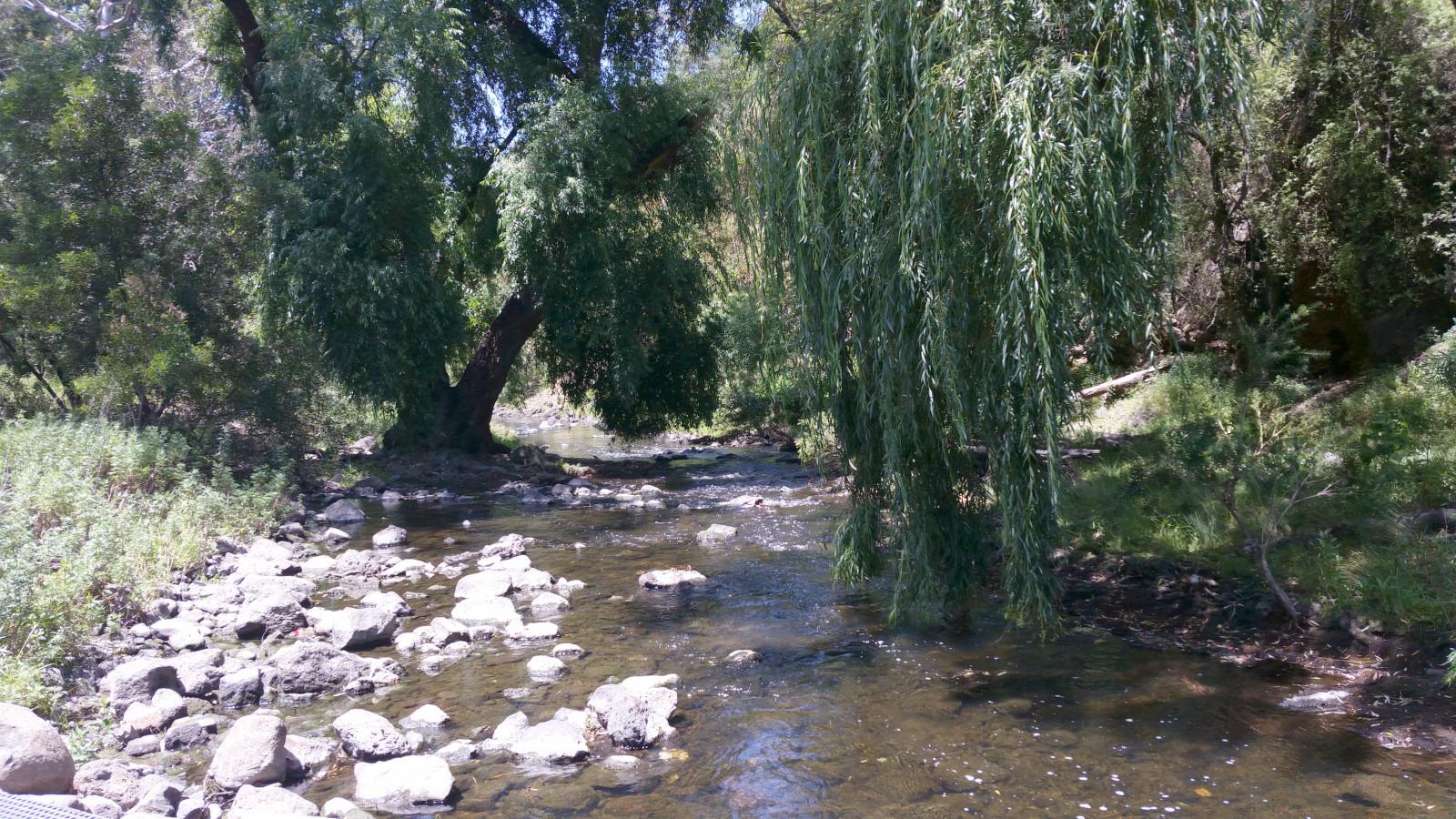
The Capital City Trail: My Everest.
Well, maybe Everest is overstating it, but it is quite uppy-downy, and at 29km in length is quite a lot to ask of a lady of exponentially advancing years.
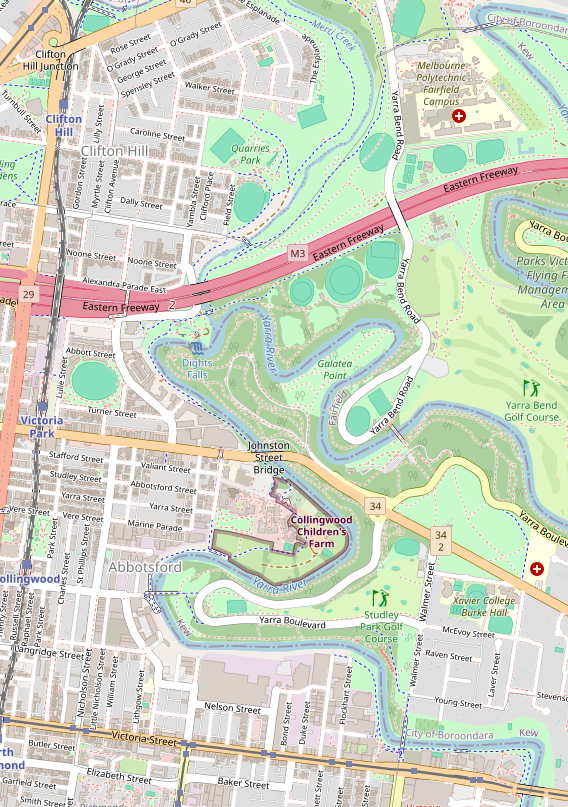
My first assault from Federation Square to Victoria St. was pretty grim and gruelling. However on New Years' Day 2026, duly refreshed after a few months' at base camp, I returned to the trail via the number 109 tram East along Victoria St. as far as the Yarra River (bottom right of the map), with the intention of following the Yarra and Merri Creek around as far as Clifton Hill (top left) and return home to Carlton via the number 86 from Clifton Hill Interchange.
The State Library was shut for New Years' Day, so with my usual work routine disturbed it seemed the sensible thing to do.
Also sensible was the decision to pack only a couple of bottles of water, rather than one of water and the other of wine, as would be customary on an expedition like this. This was not entirely due to a seasonal resolution to moderate my bad habits, but also for pragmatic reasons. As I learned last time, reasonably-spaced lavatorial facilities are not guaranteed along the trail. (Thank heavens for that little satellite campus of Melbourne University!) Any beverage of a diuretic nature can be a hazard under such conditions.
Things went quite smoothly until the trail petered out and, upon consulting the map, I found I'd missed a pedestrian bridge a few hundred metres back where I was supposed to cross the river. In fact, I'd not so much missed it as glanced at it thinking "Thank heavens I don't have to cross that."
I'm not good with heights. The swine who made the bridge platform a see-through lattice knew perfectly well what he was doing to those of us so constituted. As I ventured onto the bridge and found it not at all to my liking, I instinctively clapped one hand to the top of my head, as the breeze which had seemed quite mild when on terra firma now seemed sure to whisk my second-hand (but expensive) hair away to the murky waters, far, far below.
I also adopted a wide stance and a crouch as I lurched from the handrail at my left to the handrail at my right and back again, not because the bridge was swaying in the wind, but because it seemed reasonable to expect that it might do so at any moment, and wise to establish a good rhythm ahead of time, like a schoolgirl about to launch herself at a skipping rope.
Others strode blithely tall and haughty across the bridge, heedless of the all-too-apparent dangers — in some cases even bringing their children with them!
"More fool they," I thought, scuttling crab-like until, vindicated, I reached the far side with my bodily integrity and dignity quite intact.
I made the mistake of looking back across the gully and remembered that I find horizontal expanses scarcely less distressing than vertical drops. I hugged the ground with more ardour as I followed the path up to a road which traced the bend of the river and did little else. There was space here for a good-sized row of shops with a warmly welcoming pub at either end, and their absence just seemed to make all this open road unencumbered by destinations (or for that matter motorised vehicles) the more offensive and unsettling.
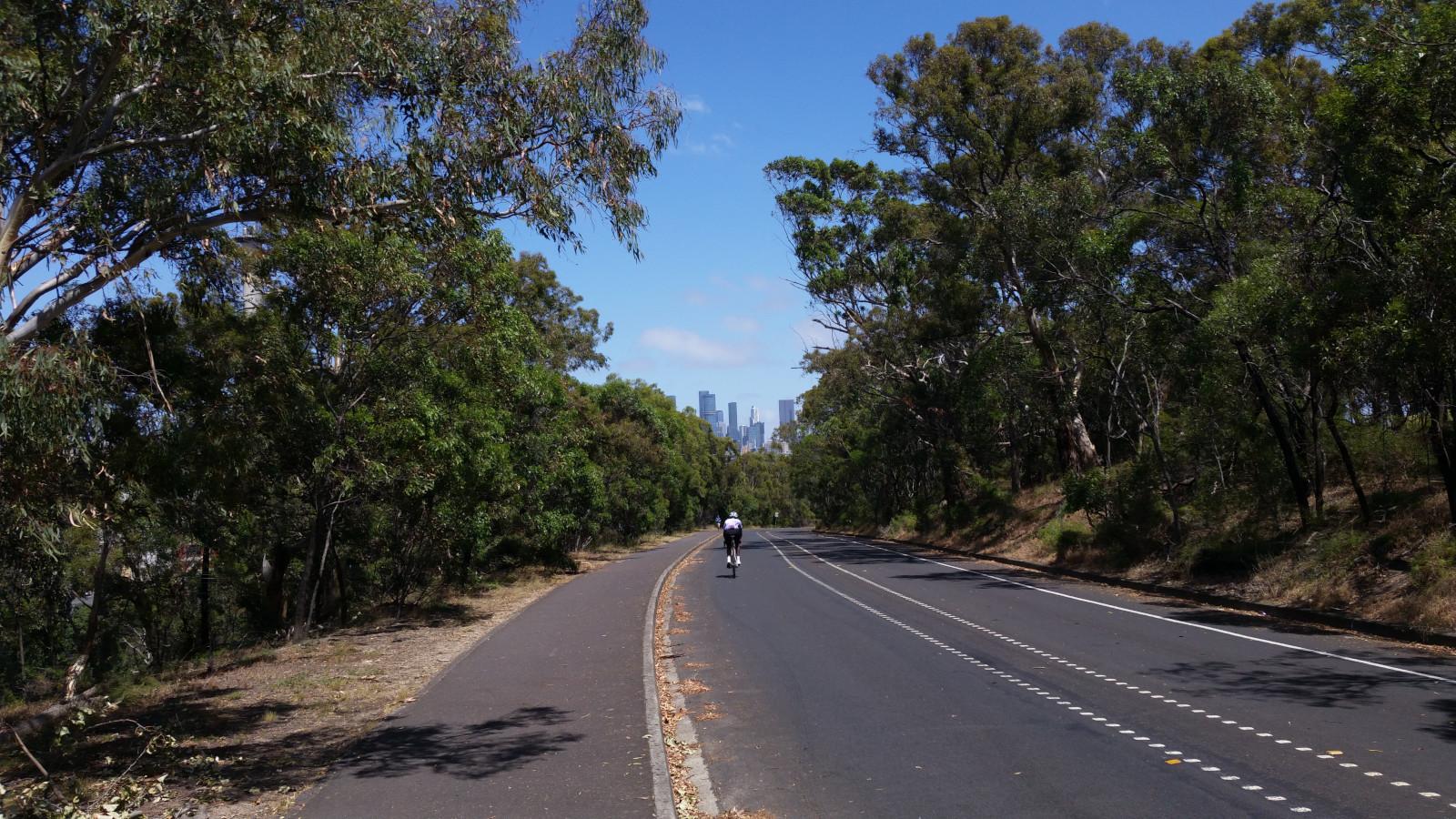
Nothing spoils unspoiled nature like a road. If somebody's taken the trouble to carve a road for large vehicles through a stretch of nature, one would expect a destination somewhere along it. Here there's nothing but a length of asphalt to let trees whip past your windows in a blur as you flatten the occasional small animal on your way to where you just came from. If that's your idea of a good time.
A few hundred metres from the path up to the road, there's another path leading down from the road and through a park to a bridge virtually identical to the one I recently crossed. I stood in the shade of a large tree to consult the map and confirm that this bridge is in fact part of the trail. Also to take stock of my life to this point, because it's New Years' Day, and that's the done thing apparently.
Quite honestly and sincerely, scary bridges notwithstanding, I feel exceptionally good, and have done for a couple of years now. I wish I could explain it to you, but it's a wonderful feeling. It's always there, and no matter what the circumstances I can bring it to conscious awareness to appreciate it. Having taken a moment to do so, I climbed the ramp to the bridge.
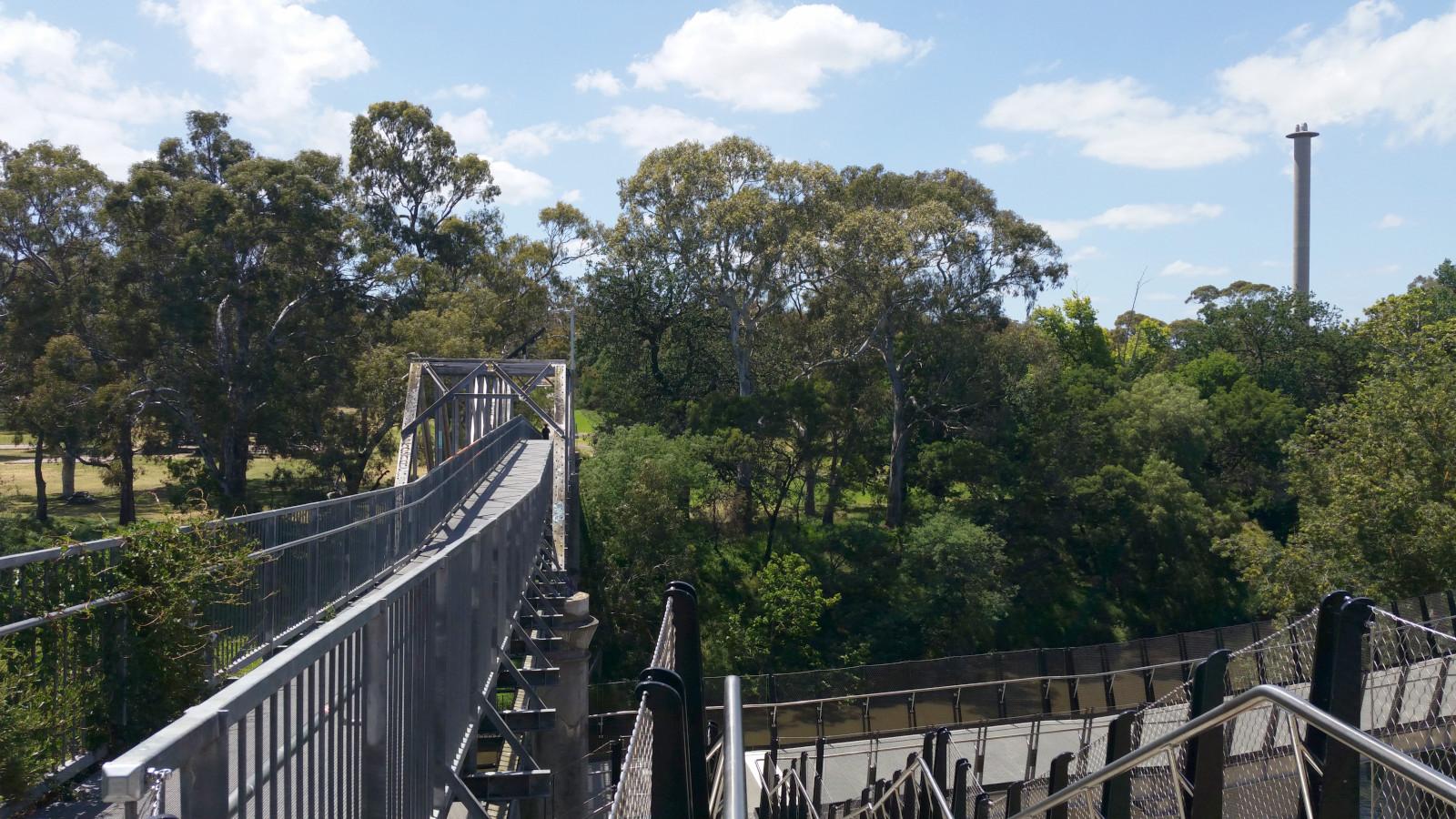
Honestly, I can't imagine why they had to make these bridges so high. I shouldn't think any vessel much taller than a kayak has come so far up the river in half a century. I swear the last bridge must still be in view just off to my left, but I daren't take my eyes off the far end of this one in case I see something I don't like, such as the vast, yawning nothingness that I know for a fact surrounds me on all sides.
I notice I've one hand clamped to the top of my head again, despite the complete absence of the mildest breeze. I think it's now become a generally comforting habit, and make a mental note to guard against doing it in social settings, as it might seem a bit peculiar. In the meantime, at least I can be sure my head's not spontaneously dropped off. That's something.
Back on my customary side of the river, being an old hand at this sort of thing now, I had the presence of mind to take a photo in the direction from which I'd come, and felt only slightly queasy as a consequence.
A little further upstream, I lost the sense of the trail being pressed hard up against the city, and much to my surprise came upon several rather expansive fields. This I did not expect. On the far side of the first one, I saw an ecclesiastical building with a rather grand gothic spire peeking through the trees. Ah! I'd seen this on the map. Abbotsford Convent. I wondered whether the sisters might be persuaded to let me use their loo.
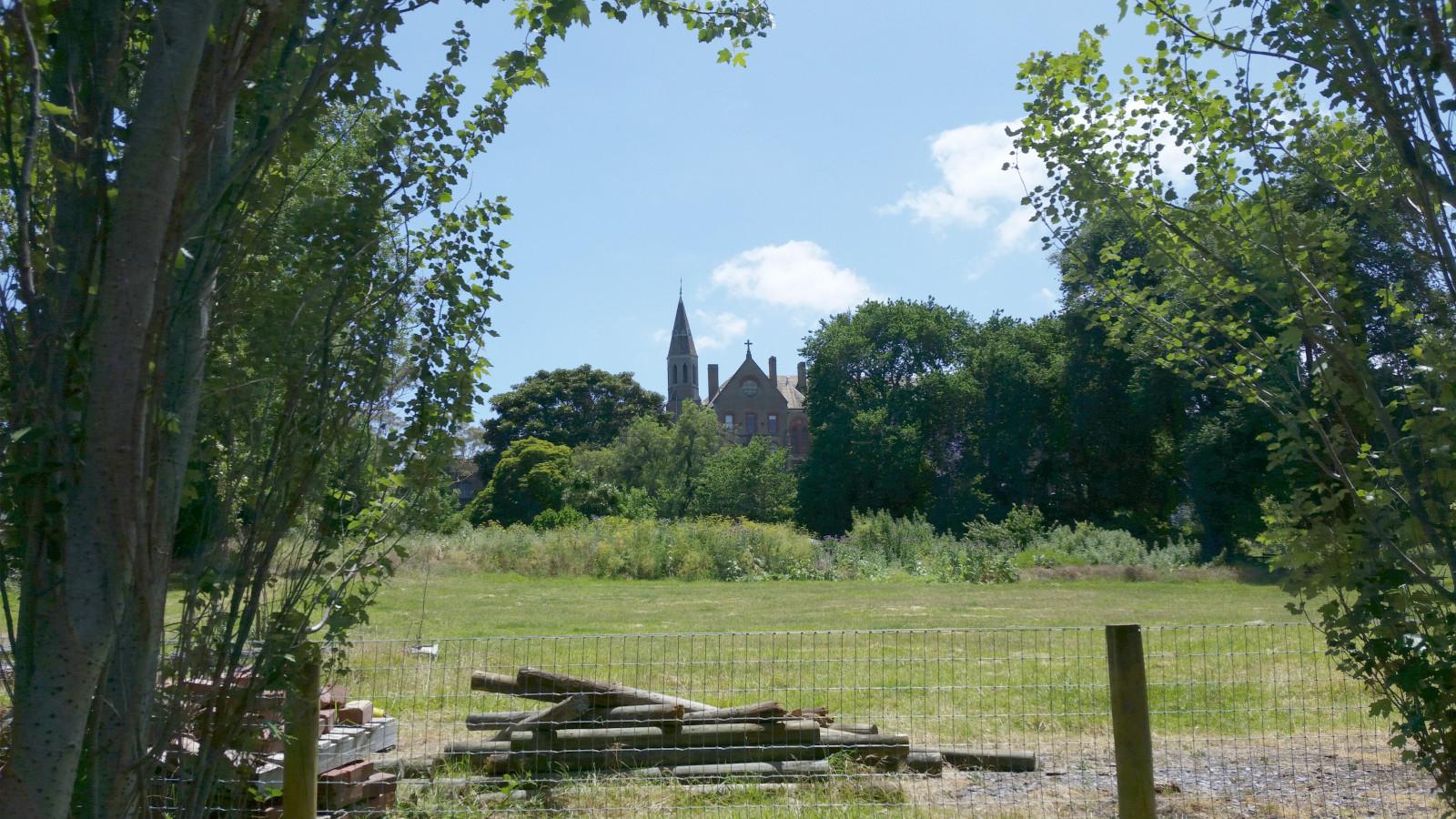
As I later learnt, it was as well for me that the sisters had decamped in 1975, as by all reports they were a rather austere lot whose main business was ministering to the welfare of fallen women and girls judged to be in imminent moral danger.
Moral judgements are obviously subjective, but I think it would stretch the imagination of even the most puritanical to put me in that category. I would of course, even at this late date, give all due and proper consideration to serious offers of vice, moral turpitude, and lascivious indulgence, but I rather think I've left my run a bit late to distinguish myself with noteworthy achievement in that field. Alas.
However the sisters also had a sideline in accommodating elderly women of scant economic means. Knowing bureaucracy as I do, I suppose that had I ventured beyond the gates of the convent while it was still a going concern there would be a non-zero chance of my being corralled in with that contingent due to administrative inattentiveness, and spending the rest of my days occupied in laundry and penitence — activities for which I have no more demonstrable aptitude than sins of the flesh. So all up, I think it's as well that the former convent has been turned over to the hosting of all manner of worthy community-enhancing ventures.
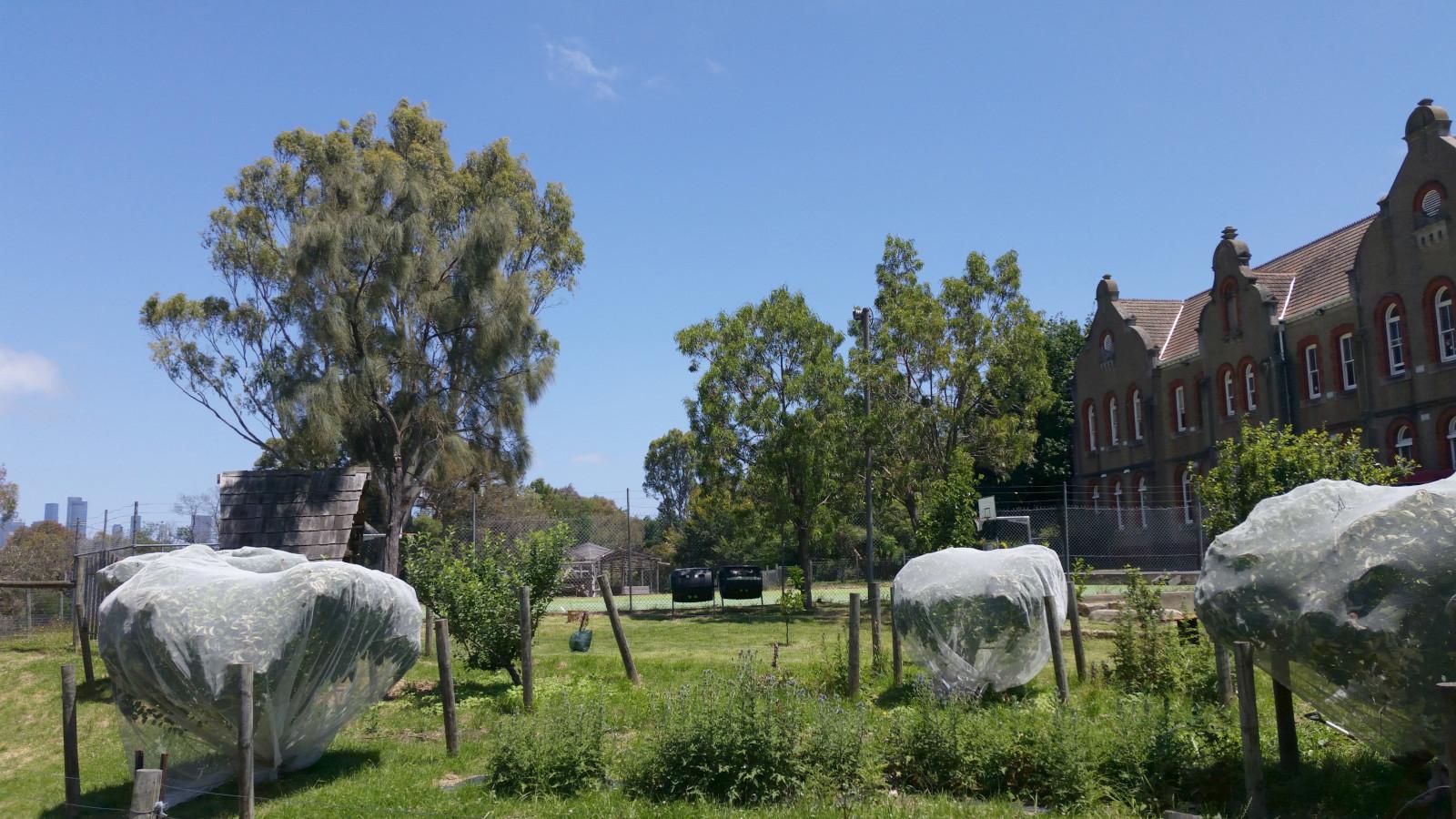
The land between the convent buildings and the river bank is now the Collingwood Children's Farm, which like the convent precinct itself would be bustling with activity on any other day. Fortunately their public lavatory was open (and doing brisk business from passers-by), which was a weight off my mind given how much ground I had still to cover.
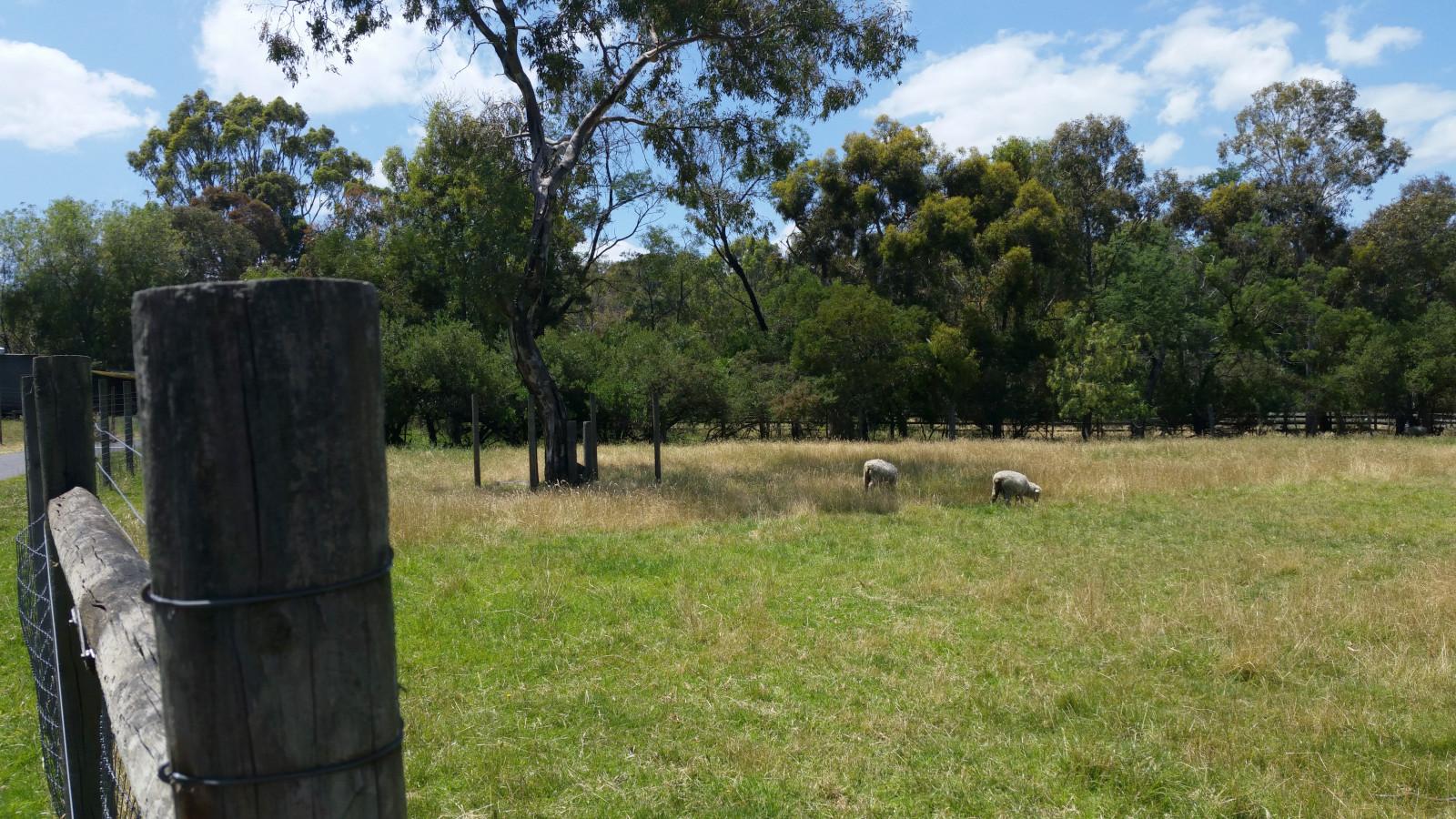
As somebody who lived in regional Australia for the better part of two decades, I cannot tell you quite how surreal it is to be surrounded by little family/hobby farm scenery like this while knowing, intellectually at least, that you are actually in the inner suburbs of Melbourne.
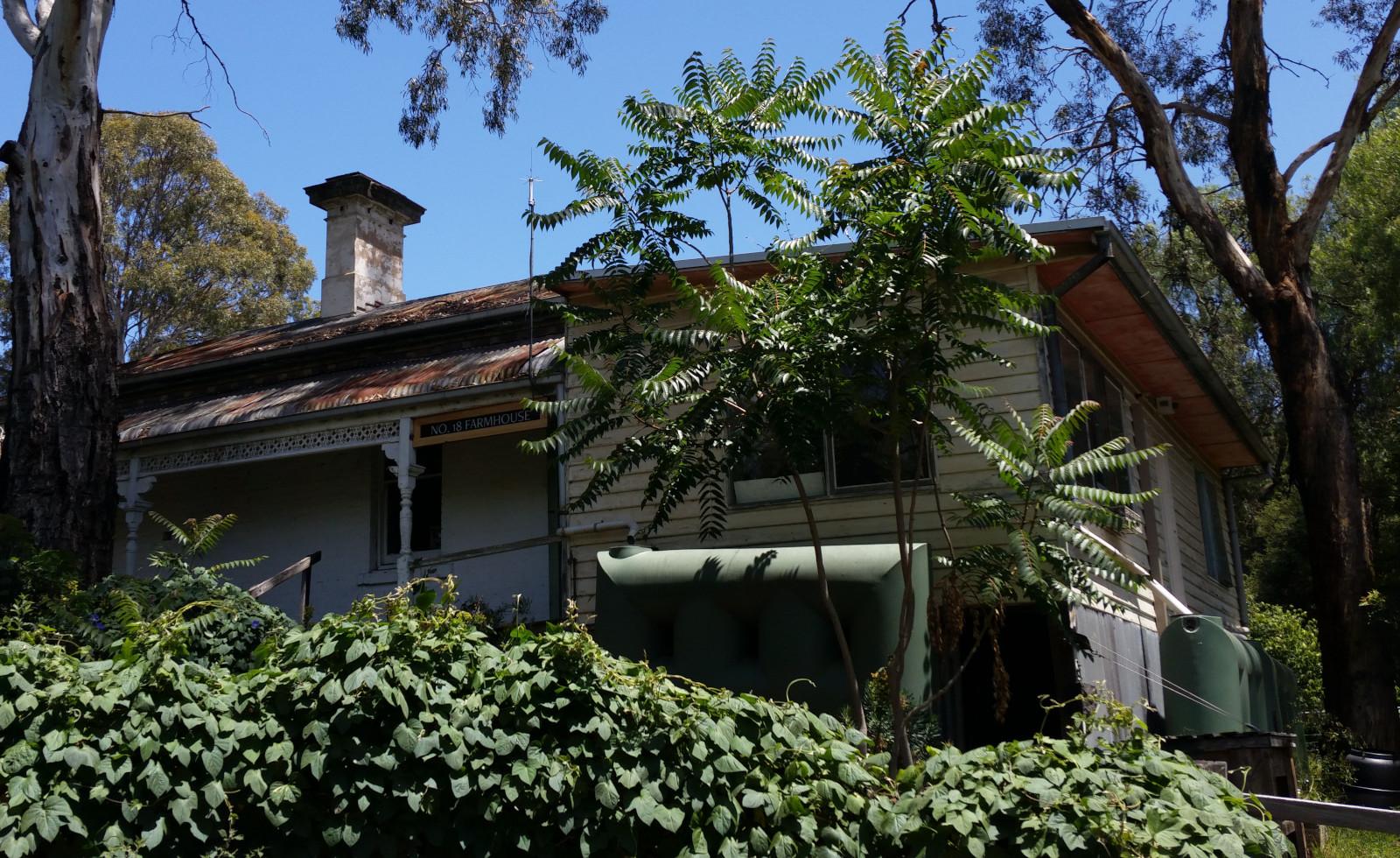
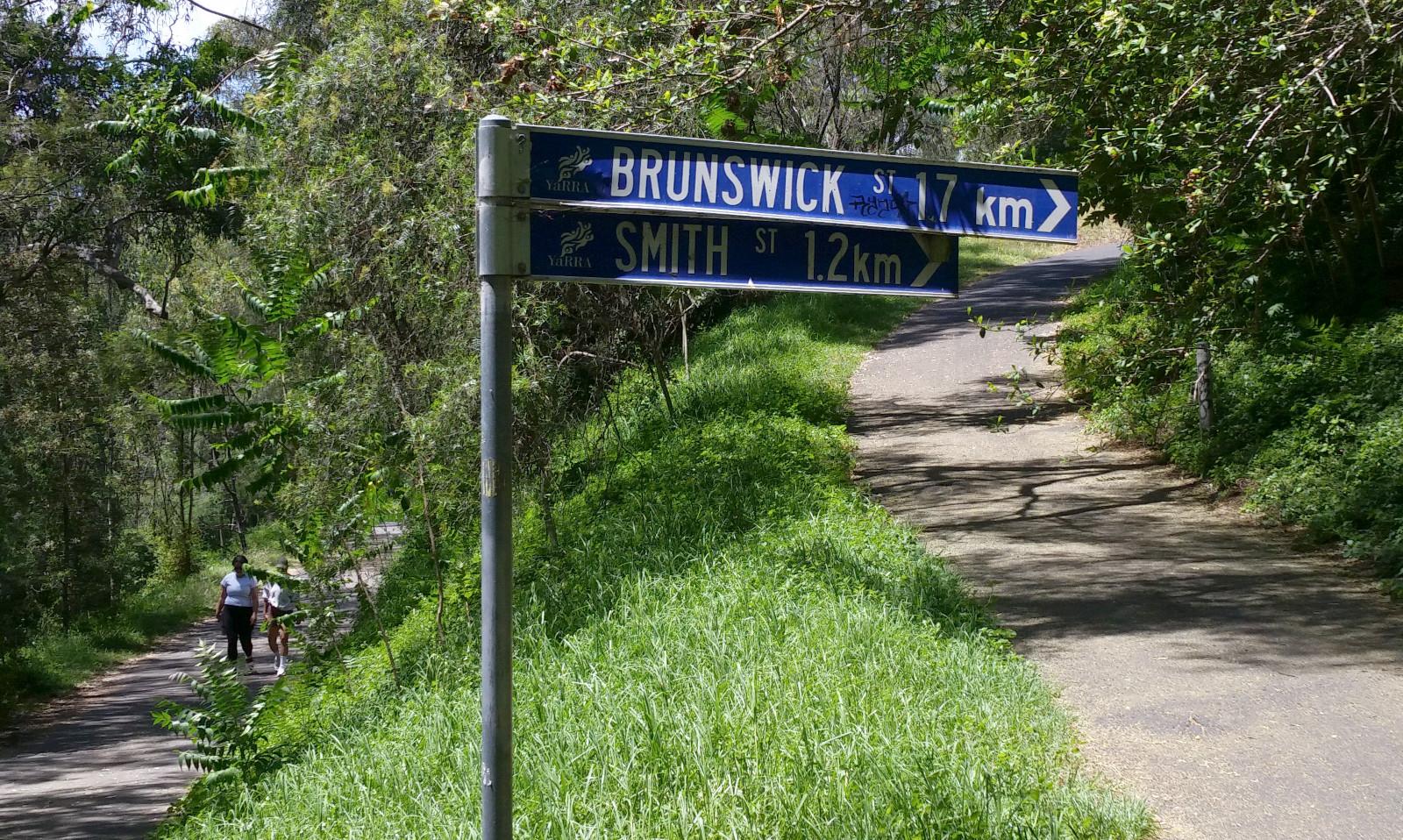
A little way past the farm there's a path up to street level. I took a photo solely to prove to myself later, when I would begin to doubt it, that from here it's roughly ten or twenty minutes walk to the main streets of Collingwood and Fitzroy respectively. Thence I would say maybe another ten across Carlton Gardens to my flat a couple of blocks from the CBD.
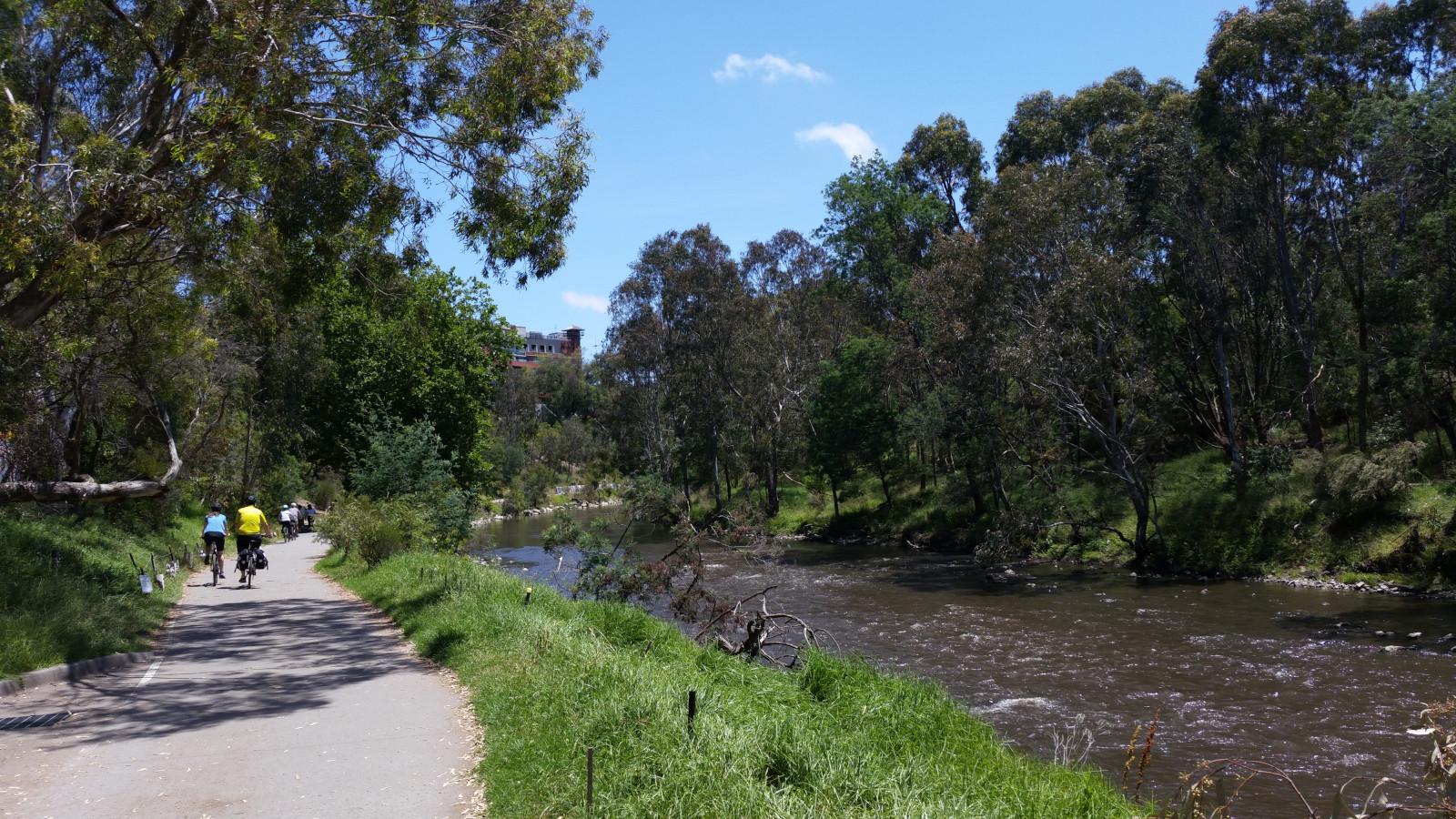
Further upstream, the Yarra gets shallow and runs faster. I can't tell you anything about the building atop that lofty promontory in the distance, apart from the fact that it's clearly the home castle of a Flash Gordon villain. Beyond that, I can only speculate.
This is Dight's Falls, situated at a conjunction of volcanic and sedimentary rock which narrows the river and forms the bulk of the falls, atop which in the 1840s flour miller John Dight put an artificial weir, which frustrated migrating fish for a century and a half (not to mention the people who for millennia had been in the habit of catching said fish there, although that was far from the greatest of their problems by then). The fishes' issues at least were substantively ameliorated in the 1990s, with the construction of a "fish ladder", which is a real thing that fish use, according to Wikipedia.

The original purpose of the weir was to trap negative entropy (or "energy", if you want to be prosaic about it) and, on a discretionary basis, release it to a hydraulic turbine via a "head race" channel as showcased here by my not noticeably lovely (and certainly not bright and bubbly) assistant Katy, who is — to be fair — shagged out from an awful lot of walking.
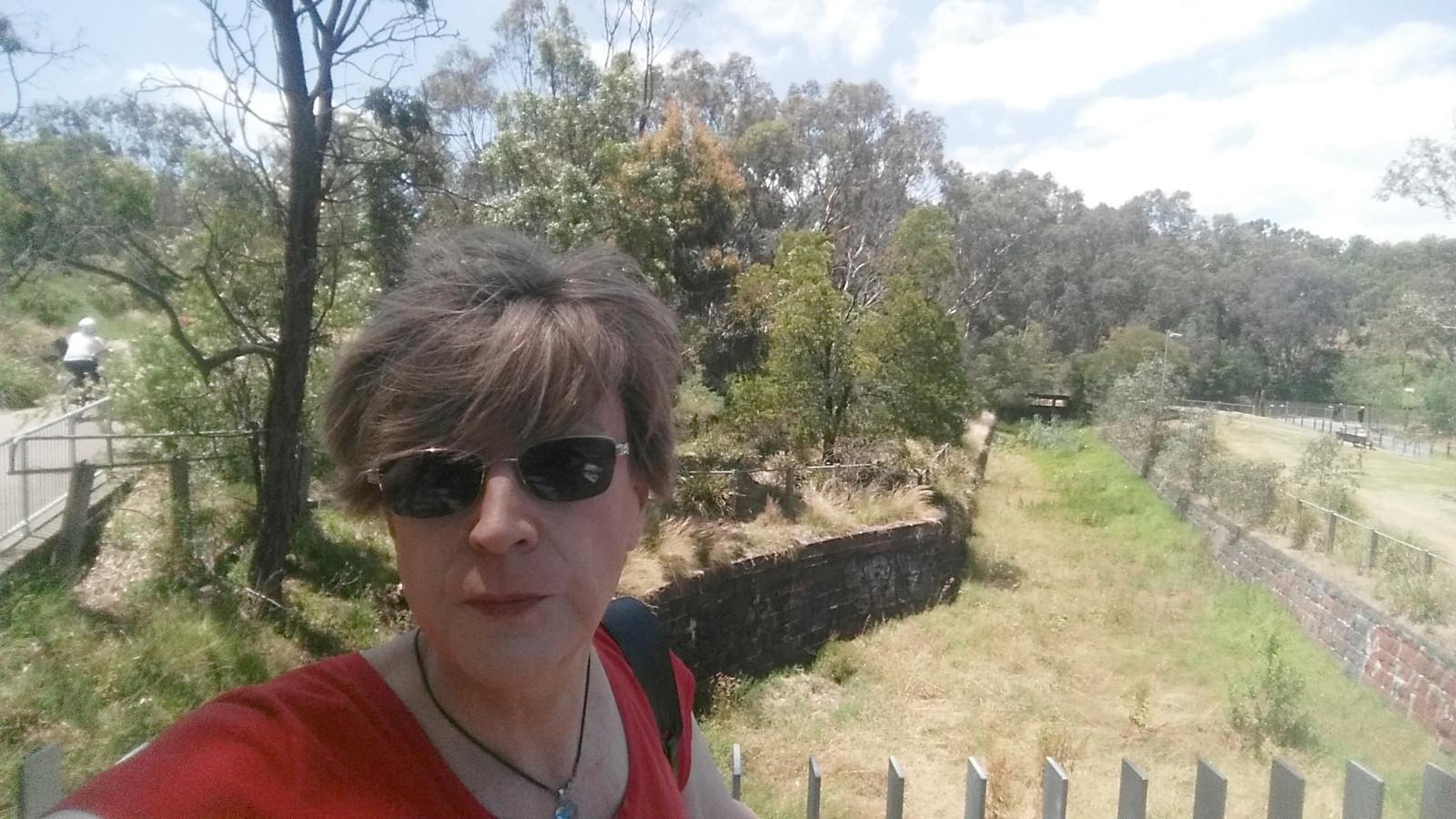
Katy is standing on a viewing platform atop what remains of the turbine house, which now appears to mainly function as a pigeon roost. The Victorian Heritage Database has some photos and illustrations that provide a better idea of the site than I could capture. The weir, head race, tail race, turbine, mill, etc. were all repaired, rebuilt, or replaced at least once over the next sixty-odd years as the facility passed though various hands and periods of disuse. In 1909, a final pair of hands took ownership of the plant and equipment and secured a not necessarily suspiciously brief three-month lease on the site from the Melbourne and Metropolitan Board of Works. As luck would have it, the whole lot burned to the ground in a catastrophically comprehensive fire before that three months were up. What are the chances?
Now what I find really interesting, after reading entirely too much about it, is that by the 1880s the city of Melbourne had a pressing problem which this section of the river could relieve, and in turn provide the city with an opportunity.
The full story is related by the Collingwood Historical Society and a guy called Bob, but the essentials run thus: Industrialisation and over-enthusiastic civil engineering had bestowed a number of blessings upon the Yarra; chiefly but by no means exclusively salination and untreated sewage. The pumping station that was built to supply fresh water to the Royal Botanic Gardens and Albert Park was now killing the plants and causing a literal and metaphorical stink.
So a site for a new pumping station was needed further upstream. The obvious place was Dight's Falls, but the mill had exclusive rights to the water from the weir and the owner was unlikely to take kindly to the public piggybacking off his power source. So the pumping station was set on the opposite side of the river, with it's inlet pipe ever so slightly downstream from the mill, so as not to upset the neighbours.
From there, the water was pumped uphill to a new reservoir located at the highest point in the area, which happens to be just beside that useless road I was complaining about earlier, and with what I expect was a grand view of the river and the Abbotsford Convent on the other side. From the reservoir, gravity was sufficient to carry the water over the first of those bridges I gingerly crossed this afternoon (!) and on to the Botanic Gardens and Albert Park. En route it also supplied many of Melbourne's other beautiful green oases, as well as up to three hundred elevators in the CBD.
I was not aware that hydraulic lifts were a thing. Given the labour-saving option of standing in a small box mounted on top of what is essentially a (somewhat) controlled geyser, I rather fancy that I'd have opted to take the stairs. I really don't need an additional irrational fear, but I understand that there are only a few hydraulic elevators remaining in Melbourne (and now on mains water; the pumping station was decommissioned and demolished in the 1960s), so my chances of accidentally using one are vanishingly small.
Still, Dight's Falls water was key to making Melbourne a skyscraper city, and it quite possibly saved my beloved Carlton Gardens from becoming a lifeless cesspit. Speaking of lifeless things…

… can I go home now?

Just past Dight's falls is the junction with Merri Creek, which is a good deal prettier than it was in the days when I was young. And as somebody not usually much impressed by arterial roads, this is the angle at which they are best appreciated.
At last I climbed up to the entirely unlovely Clifton Hill Interchange (not pictured, with good reason) and caught the number 86 back to Carlton Gardens as planned.
I enjoyed this bit of the Capital City Trail tremendously, and will certainly make a point of returning to the convent and the farm on a day when they're in full swing. A subsequent couple of disturbed nights due to the worst sunburn I've had since I was about ten years old was a small price to pay.
Damn I love the place where I live.