The Coalition’s recent statements committing to “prioritise supply to the domestic market” is welcome recognition that gas exports are hurting Australians.
“The government can achieve this tomorrow by capping exports. It is not complicated,” said Richard Denniss, Executive Director at The Australia Institute.
“We have provided certainty of supply and price to the Chinese market for decades, while ripping off customers at home.”
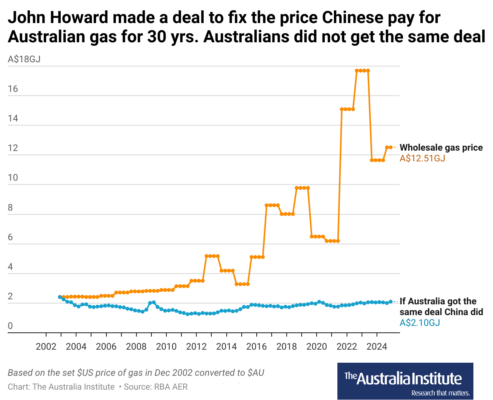
Australia is one of the largest exporters of gas in the world. There is no shortage of gas in Australia, as highlighted in the Coalition’s recent statements.
Multinational gas export corporations already export 80 per cent of Australia’s gas and control almost all of Australia’s gas reserves.